Design for the second half of the day
Landscape Lighting
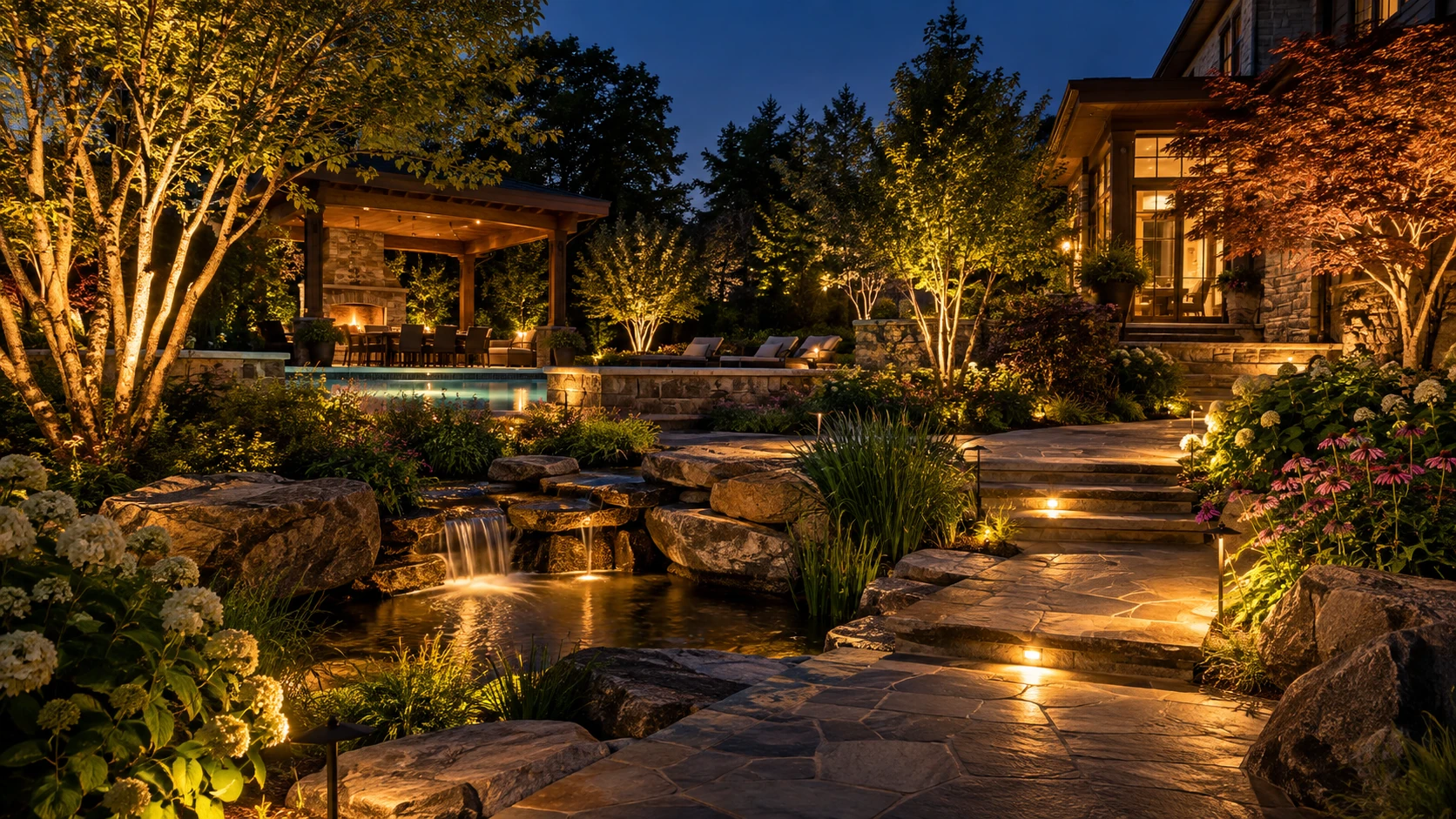
Good landscape lighting reveals architecture, trees, paths, walls and water without turning the property into a bright parking lot.
Design intelligence
Light the hierarchy, not everything.
The night plan should decide what deserves attention, what needs safe illumination, what should recede, and how glare is controlled. Layering creates depth and lets the landscape remain a landscape after dark.
01
Safety + circulationSteps, changes in grade, paths and entries need useful light without harsh glare.
02
Trees + architectureUplighting and grazing can reveal canopy and material texture when used selectively.
03
Water + focal pointsReflections and moving water can become quiet night-time anchors.
04
Control + restraintZones, timers, dimming and careful fixture placement help the property feel elegant rather than overlit.
What gets resolved
Questions before construction.
Educational content creates trust when it clarifies decisions the homeowner did not realize mattered. Production answers should match the client's actual process.
Usually less than people expect. Contrast, placement and beam control often matter more than raw brightness.
Often yes, though access, wiring routes, voltage drop, transformer capacity and planting growth should be evaluated.
Shield fixtures, aim carefully, use appropriate beam spreads and keep direct views of bright sources under control.
Next step
Walk the property before prescribing the solution.
The right consultation connects goals, architecture, topography, drainage, access and investment into a realistic path forward.