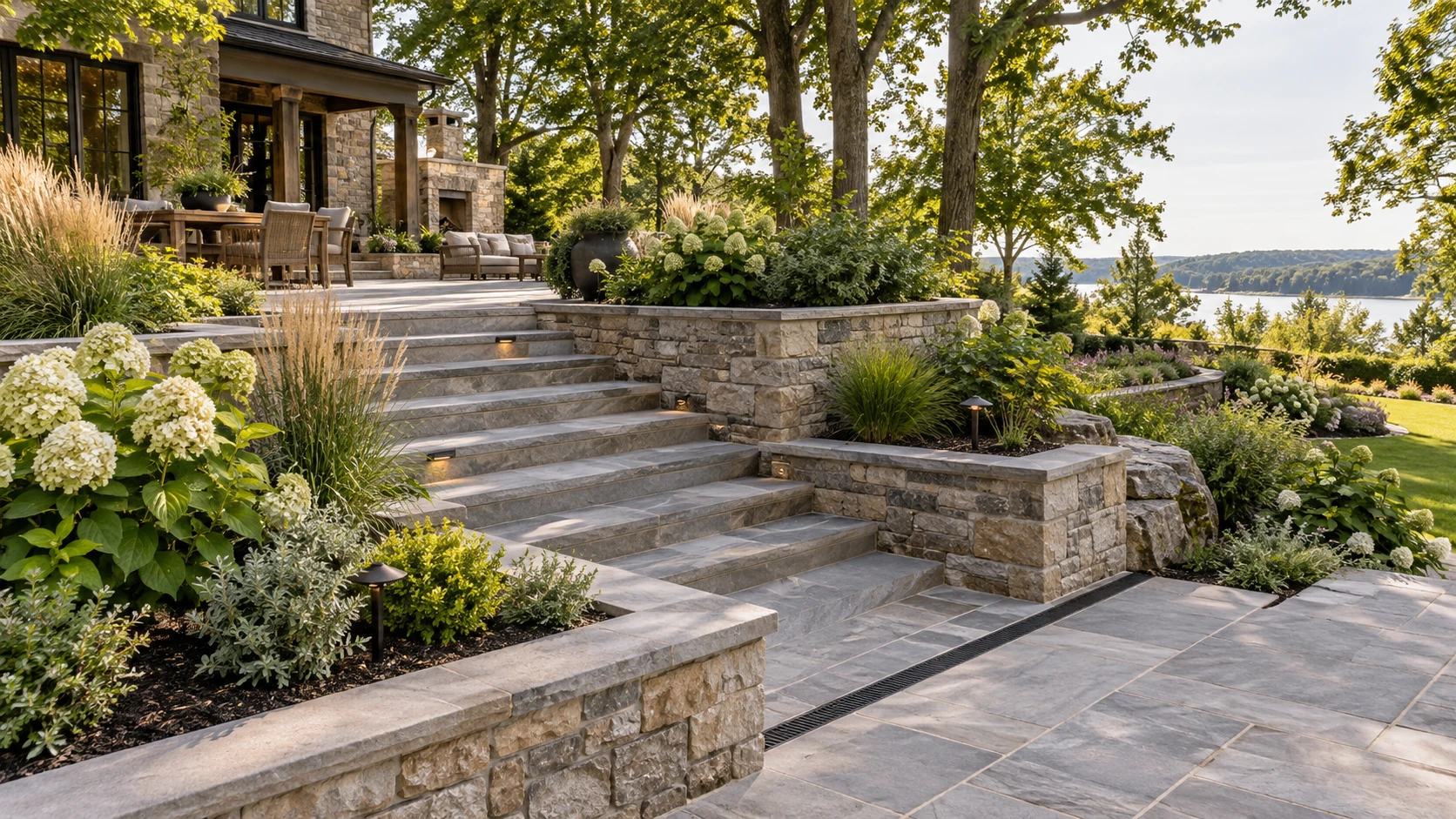
Protect the investment beneath the beauty
Drainage & Grading
Drainage is landscape design when it determines where water moves, whether walls last, whether beds erode and whether outdoor rooms remain usable.
Design intelligence
Water will move. The design decides where.
A premium site should treat grading and drainage as core design infrastructure, not an afterthought. Surface slopes, downspouts, wall drainage, collection points, swales, inlets and discharge locations all influence long-term performance.
01
Read the watershedUnderstand where water enters, crosses and leaves the property before adding surfaces or walls.
02
Shape surface drainageGrades should move water deliberately away from vulnerable structures and gathering spaces.
03
Protect retaining systemsWall drainage and backfill strategy matter as much as the visible stone.
04
Integrate with designChannels, inlets, swales and planting can be detailed so performance does not look like an afterthought.
What gets resolved
Questions before construction.
Educational content creates trust when it clarifies decisions the homeowner did not realize mattered. Production answers should match the client's actual process.
Possible causes include poor pitch, settlement, blocked outlets, insufficient drainage or water entering from adjacent grades.
Sometimes planting and grading help; other conditions may require drains, conveyance, wall drainage or broader site work.
Yes. New impervious surfaces and walls change water movement, so drainage belongs in planning and construction from the beginning.
Next step
Walk the property before prescribing the solution.
The right consultation connects goals, architecture, topography, drainage, access and investment into a realistic path forward.